RSS

💰 Are You Building Your Wealth… or Your Landlord’s?

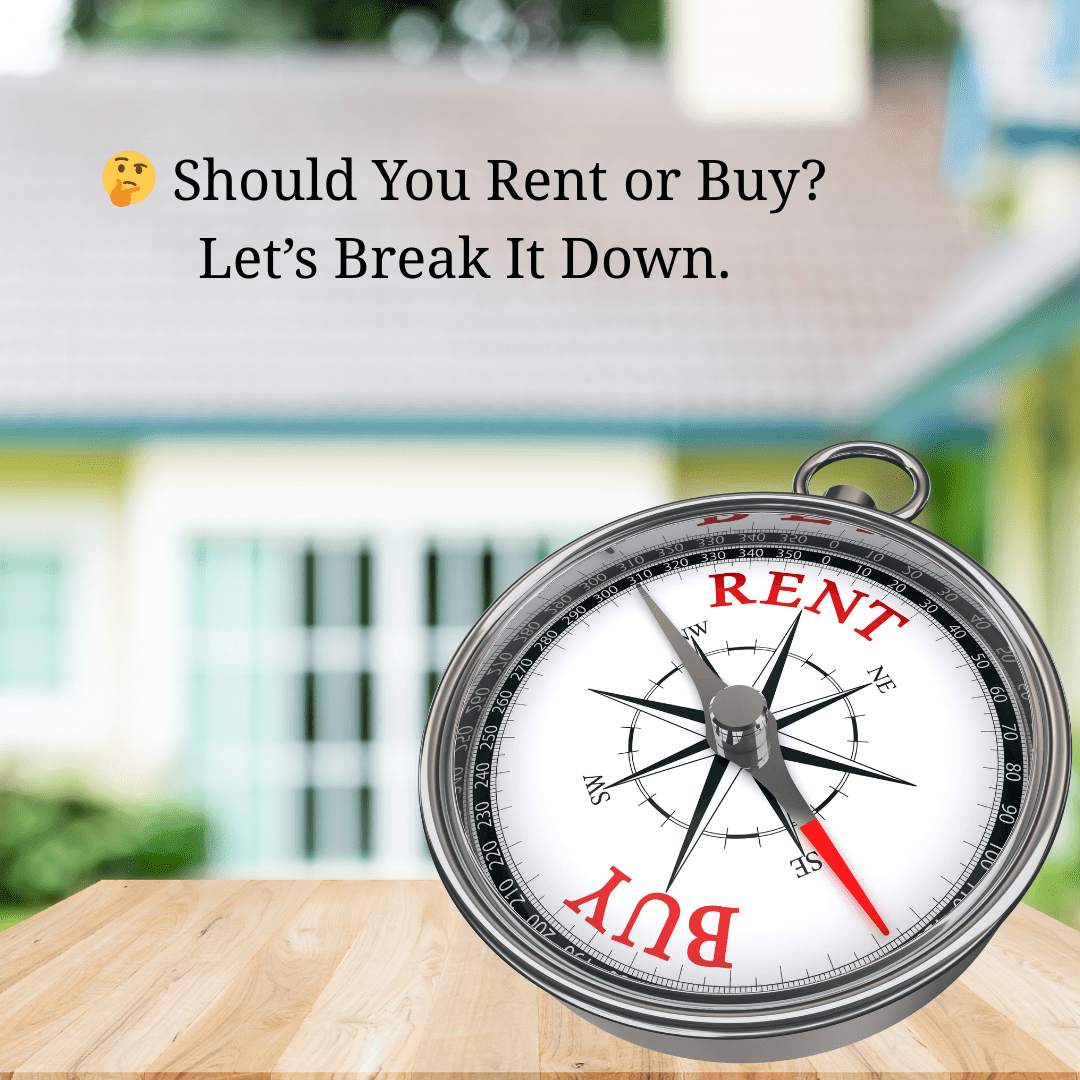
Renting vs. Buying: Pros and Cons

When it comes to housing, one of the biggest questions people face is whether to rent or buy. Both options come with their own pros and cons, and the right choice often depends on your financial situation, lifestyle, and long-term goals. It used to be that monthly rent was lower than a mortgage payment, that is not really the case anymore, depending on how much of a down payment you have and the price of the home you are buying.

It is also important to note that the rent your landlord charges does include their costs, mortgage, property taxes, and if applicable, condo or association fees. If done correctly, it will also include their insurance and a percentage for ongoing maintenance and risk, usually around 5%.

Typically, you are responsible for all utilities, water, hydro, gas, and of course internet, tv, home phone. You are also required to have insurance. There are instances, for the most part, with condos, that some of these could be included, however, not internet, tv, phone, and your insurance. 

That said, this is a personal choice for each person and their unique situation.  

Pros of Renting

  • Flexibility: Renting gives you more freedom to move. If you’re not sure how long you’ll be living where you are, renting might be the better option.

  • Lower upfront costs: Renters don’t have to worry about a down payment, closing costs, or other expenses tied to purchasing a home. In a range of 1.5% to 4% of the price of the home. included are land transfer tax, legal fees, home inspection fees, appraisal fees, and title costs. First-time homebuyers may be eligible for rebates, such as the First-Time Home Buyers' Tax Credit and Land Transfer Tax rebates, which can help offset these expenses. 

  • No maintenance responsibilities: Repairs and upkeep are typically the landlord’s responsibility. Note that landscaping and snow removal could be the renters responsibility, under specific agreements.

  • Predictable payments: Rent is usually fixed for the length of the lease, making it easier to budget.

Cons of Renting

  • Less stability: A landlord may decide not to renew your lease or could increase rent when your lease ends. (There are rules and procedures to follow. There are limits to the increase allowed and landlords cannot have you leave, except for specific circumstances, for example, they are moving back in, they are selling and the new owner is moving in.) I strongly suggest reading the Landlord Tenant Act!

  • No equity building: Your rent payments don’t go toward ownership; they’re simply an expense.

  • Limited control: You can’t always customize or renovate your rental to suit your preferences.

Pros of Buying

  • Equity building: Every mortgage payment helps you build ownership in your home, which can grow your wealth over time.

  • Stability: You don’t have to worry about moving because a landlord wants to sell or increase the rent.

  • Creative freedom: You can renovate, decorate, and make the space truly yours.

  • Potential appreciation: Ottawa real estate has historically increased in value over the long term, which can benefit homeowners when it comes time to sell.

  • Financial advantage: Unlike renting, your payments contribute to an asset you own. Over time, as your mortgage balance decreases and your home’s value increases, you build equity that strengthens your financial position. Homeowners can also borrow against their equity if needed — an option renters don’t have.

Cons of Buying

  • Upfront costs: You’ll need a down payment, closing costs, and other fees when purchasing a home.

  • Ongoing responsibilities: Maintenance, repairs, and property management all fall on you.

  • Market risk: Home values can fluctuate, and go down as well as up, depending on the market, just like the stock market and unless you are selling, over time, this is less of an issue.


In closing, it is a very personal decision, and for some like it was for my mother, owning is not an option. Times have changed, the salary to purchase price ratio has made it tougher to buy a first home. If you are willing to go the route that my friends, colleagues, family and I had to do, buy a starter home, and work up to your dream home, there are options that I am happy to discuss with you.

Click HERE if you have questions or would like to discuss your options. 

Read

🏡 Home Inspections: What to Expect and Why They Matter

You’ve submitted an offer on a home—maybe even your forever home. One of the most important conditions of your offer is the home inspection. If this is your first time buying, the process might feel new and overwhelming. Even if you’ve been through it before, consider this a helpful refresher.

Let’s walk through the role of a home inspector, the inspection process, and why it’s such a valuable step in your purchase.


🕵️ The Role of Your Home Inspector

As a certified home inspector, my job is to carefully examine the property and identify any current or potential issues as per a set standards of practice. I provide a detailed report so you and your Realtor can make informed decisions about next steps.

Here’s what you can expect:
• ⏱ A typical detached home inspection takes about 3 hours, though larger homes may take longer.
• 💵 The investment starts at $525 + HST.
• 📑 You’ll receive a full written report—usually within 24 hours—including photos and clear explanations.
• 🤝 We’ll review the findings together so you leave with a solid understanding of the home’s condition.

💡 Extra Peace of Mind: Every inspection also comes with a warranty. This provides added protection beyond the inspection itself, so you can move forward with more confidence. 👉 Click the link for full details. Warranty


❓ Why Have a Home Inspection?

Here are the Top 5 Reasons every buyer should consider:

  1. 🕵️‍♂️ Uncover Hidden Issues – Problems like leaks, faulty wiring, or foundation cracks often go unseen during showings.

  2. 💰 Save Money Long-Term – Catching issues early can prevent expensive surprises down the road.

  3. 🤝 Negotiating Power – Use the results to renegotiate price or request repairs before closing.

  4. 🧘 Peace of Mind – Knowing the home’s true condition gives you confidence in your purchase.

  5. 📅 Future Planning – Even non-urgent issues give you a roadmap for future maintenance.


🔍 What Gets Inspected

During an inspection, I examine five key areas:

  1. 🏠 Roof & Exterior – Shingles, flashing, gutters, siding, grading.

  2. 🧱 Structure & Foundation – Stability, settling, cracks, moisture concerns.

  3. 🚰 Plumbing – Pipes, drains, water pressure, hot water tank.

  4. 💡 Electrical Systems – Wiring, panels, outlets, overall safety.

  5. ❄️🔥 Heating, Cooling & Ventilation – Furnace, AC, ductwork, efficiency.

⚠️ Note: Only safe and accessible areas are inspected—anything unsafe, hidden, or blocked can’t be evaluated.


📋 The Process Step by Step

Here’s how a typical inspection flows:

• 🌳 Exterior First – We start outside, working around the home. I use a drone to safely inspect the roof, shingles, vents, chimney, and flashing. Windows, doors, siding, bricks, and the garage (including openers) are also checked.

• 🏠 Interior Check – Inside, we’ll go through each level, inspecting doors, windows, outlets, smoke detectors, plumbing, and evidence of leaks.

• 🪜 Attic & Insulation – I’ll look for leaks, ventilation issues, and confirm insulation levels.

• 🌡 Thermal Imaging – Used as needed to help reveal hidden issues behind walls.

• 💬 Review & Tips – I explain everything in plain language, offer helpful maintenance advice, and answer your questions throughout.

🎯 My goal? For you to feel confident and knowledgeable about the home when we’re done. And if you think of questions later, I’m always available to clarify.


💰 Investment

• Condo inspections start at $425 + HST
• Freehold inspections start at $525 + HST
• 📑 Written report within 24 hours (with photos + clear explanations)
• 🤝 In-person review of findings so you leave with confidence

💡 Extra Peace of Mind: Every inspection comes with a warranty as mentioned above. 


🏘 Home Inspections for Sellers, Too

Inspections aren’t just for buyers—they’re just as valuable for sellers. A pre-listing inspection gives you the chance to:

• 🛠 Address repairs before hitting the market.
• 💵 Price the home realistically if you can’t fix certain issues.
• 🚫 Prevent surprises during negotiations.
• 🧘 Provide buyers with peace of mind up front.

I’ve partnered with Steve for over 5 years, and when you list with him, a pre-inspection can be part of your selling strategy. It’s a proactive step that sets you apart in today’s market.


✅ Bottom Line

Whether you’re buying or selling, a home inspection is one of the smartest investments you can make. It protects your wallet 💵, safety 🛡, and peace of mind 🧘.

Thank you Ken for this great information. To learn more about Ken and Dragonfly Home Inspections, click here

Read

🏡 Home Inspections: What to Expect and Why They Matter

You’ve submitted an offer on a home—maybe even your forever home. One of the most important conditions of your offer is the home inspection. If this is your first time buying, the process might feel new and overwhelming. Even if you’ve been through it before, consider this a helpful refresher.

Let’s walk through the role of a home inspector, the inspection process, and why it’s such a valuable step in your purchase.


🕵️ The Role of Your Home Inspector

As a certified home inspector, my job is to carefully examine the property and identify any current or potential issues as per a set standards of practice. I provide a detailed report so you and your Realtor can make informed decisions about next steps.

Here’s what you can expect:
• ⏱ A typical detached home inspection takes about 3 hours, though larger homes may take longer.
• 📑 You’ll receive a full written report—usually within 24 hours—including photos and clear explanations.
• 🤝 We’ll review the findings together so you leave with a solid understanding of the home’s condition.

💡 Extra Peace of Mind: Every inspection also comes with a warranty. This provides added protection beyond the inspection itself, so you can move forward with more confidence. 👉 Click the link for full details. Warranty.


❓ Why Have a Home Inspection?

Here are the Top 5 Reasons every buyer should consider:

  1. 🕵️‍♂️ Uncover Hidden Issues – Problems like leaks, faulty wiring, or foundation cracks often go unseen during showings.

  2. 💰 Save Money Long-Term – Catching issues early can prevent expensive surprises down the road.

  3. 🤝 Negotiating Power – Use the results to renegotiate price or request repairs before closing.

  4. 🧘 Peace of Mind – Knowing the home’s true condition gives you confidence in your purchase.

  5. 📅 Future Planning – Even non-urgent issues give you a roadmap for future maintenance.


🔍 What Gets Inspected

During an inspection, I examine five key areas:

  1. 🏠 Roof & Exterior – Shingles, flashing, gutters, siding, grading.

  2. 🧱 Structure & Foundation – Stability, settling, cracks, moisture concerns.

  3. 🚰 Plumbing – Pipes, drains, water pressure, hot water tank.

  4. 💡 Electrical Systems – Wiring, panels, outlets, overall safety.

  5. ❄️🔥 Heating, Cooling & Ventilation – Furnace, AC, ductwork, efficiency.

⚠️ Note: Only safe and accessible areas are inspected—anything unsafe, hidden, or blocked can’t be evaluated.


📋 The Process Step by Step

Here’s how a typical inspection flows:

• 🌳 Exterior First – We start outside, working around the home. I use a drone to safely inspect the roof, shingles, vents, chimney, and flashing. Windows, doors, siding, bricks, and the garage (including openers) are also checked.

• 🏠 Interior Check – Inside, we’ll go through each level, inspecting doors, windows, outlets, smoke detectors, plumbing, and evidence of leaks.

• 🪜 Attic & Insulation – I’ll look for leaks, ventilation issues, and confirm insulation levels.

• 🌡 Thermal Imaging – Used as needed to help reveal hidden issues behind walls.

• 💬 Review & Tips – I explain everything in plain language, offer helpful maintenance advice, and answer your questions throughout.

🎯 My goal? For you to feel confident and knowledgeable about the home when we’re done. And if you think of questions later, I’m always available to clarify.


💰 Investment

• Condo inspections start at $425 + HST
• Freehold inspections start at $525 + HST
• 📑 Written report within 24 hours (with photos + clear explanations)
• 🤝 In-person review of findings so you leave with confidence

💡 Extra Peace of Mind: Every inspection comes with a warranty.  

🏘 Home Inspections for Sellers, Too

Inspections aren’t just for buyers—they’re just as valuable for sellers. A pre-listing inspection gives you the chance to:

• 🛠 Address repairs before hitting the market.
• 💵 Price the home realistically if you can’t fix certain issues.
• 🚫 Prevent surprises during negotiations.
• 🧘 Provide buyers with peace of mind up front.

I’ve partnered with Steve for over 5 years, and when you list with him, a pre-inspection can be part of your selling strategy. It’s a proactive step that sets you apart in today’s market.


✅ Bottom Line

Whether you’re buying or selling, a home inspection is one of the smartest investments you can make. It protects your wallet 💵, safety 🛡, and peace of mind 🧘.

Thank you Ken for this great information. To learn more about Ken and Dragonfly Home Inspections, click here

Read

Ottawa Real Estate Market Update – August 2025

As summer winds down, Ottawa’s real estate market is showing plenty of life. Prices are trending upward, sales remain strong compared to recent years, and both buyers and sellers are gearing up for what’s typically one of the busiest times of the year — the fall market.


Home Sales 📊

  • In August 2025, a total of 1,236 homes were sold across the Ottawa Real Estate Board (OREB) region.

  • That’s fewer than the 1,318 sales in July and 1,602 in June, but still represents a 12.1% increase compared to last August.

  • The slowdown from June into August is normal, reflecting the seasonal shift from the busy spring to quieter summer months.

So far this year, Ottawa has seen 9,936 home sales — a 4.1% increase over the same period in 2024.


Prices 💰

  • The average sale price in August was $686,536, up 3.6% from last year.

  • The year-to-date average price sits at $700,828, about 3% higher than the first eight months of 2024.

  • In total, the value of homes sold in August hit $850 million, which is a 16% jump from last year.

These numbers show that Ottawa’s housing sector continues to play a big role in fueling the local economy.


Listings & Inventory 🏠

  • 2,121 new listings were added in August, an 8.6% increase compared to last year.

  • There were 3,971 active listings at month’s end, up 13.3% from last year and a notable 37.1% higher than the five-year average for this time of year.

When we look at months of inventory (how long it would take to sell all current listings at today’s sales pace), Ottawa sat at 3.2 months. That’s unchanged from July and identical to last August.

👉 A 3.2-month supply is generally considered a balanced market, meaning demand and supply are keeping pace with each other.


The Big Picture 🌎

Ottawa is seeing renewed momentum, with buyers and sellers re-engaging after the slower summer pace. Prices are holding strong, sales are up compared to last year, and inventory has grown — giving buyers more choice.

At the same time, market watchers are mindful of outside factors like federal employment trends and U.S. trade policies, which could influence Ottawa’s economy in the months ahead.


✅ Takeaway for Buyers & Sellers

  • Buyers: You’ll find more inventory than last year, but competition is still healthy. Be prepared to act quickly on the right home.

  • Sellers: Strong prices and steady demand mean it’s still a great time to list, especially as the fall market ramps up.

Ottawa’s real estate market continues to reflect balance, stability, and opportunities for both sides of the transaction.

Read

Do You Need a Home Inspection for a Condo?

Yes, you do! A home inspection is one of the smartest steps you can take when buying any type of property—whether it’s a single-family home, townhome, semi-detached, stacked unit, or condo. Many people assume condos don’t need inspections, but that’s a costly mistake you’ll want to avoid.

When people hear the word “condo,” they often think of apartment-style living. But condos come in many forms—condo-townhomes, stacked condos, or even semi-detached condos. Regardless of the style, you are still responsible for the interior of your unit, and that means any issues with plumbing, electrical, appliances, or structure could end up being your problem after closing.

If you’re considering downsizing to an apartment-style condo, a home inspection is especially important. While condo living can offer less maintenance and more convenience, you still want peace of mind that your unit is safe, functional, and free from hidden issues. Downsizing should make life easier—not add unexpected costs or safety concerns down the road.

Here’s another reason inspections matter: although most condo boards require approval for changes inside an apartment-style unit, not everyone follows the rules. Sometimes owners make renovations without permission, and don’t always hire a professional. These changes can cause safety or even structural issues.

For example, I recently showed a condo where the owner had enlarged the washroom, removed the tub, and installed a massive jacuzzi tub around 30 inches high, with three unsafe steps. The top step was a shocking 16 inches from the top of the tub—imagine climbing out of that! Definitely not safe, a hazard a buyer would want to avoid! To make matters worse, they tucked a very small shower behind the tub and toilet, so that to access the shower, you would have to step over the toilet, or shimmy through the narrow gap between the toilet and tub. Not exactly what you’d hope to find in a “dream” condo.

Read

Do You Need a Home Inspection for a Condo?

Yes, you do! A home inspection is one of the smartest steps you can take when buying any type of property—whether it’s a single-family home, townhome, semi-detached, stacked unit, or condo. Many people assume condos don’t need inspections, but that’s a costly mistake you’ll want to avoid.

When people hear the word “condo,” they often think of apartment-style living. But condos come in many forms—condo-townhomes, stacked condos, or even semi-detached condos. Regardless of the style, you are still responsible for the interior of your unit, and that means any issues with plumbing, electrical, appliances, or structure could end up being your problem after closing.

Here’s another reason inspections matter: although most condo boards require approval for changes inside an apartment-style unit, not everyone follows the rules. Sometimes owners make renovations without permission, and don’t always hire a professional. These changes can cause safety or even structural issues.

For example, I recently showed a condo where the owner had enlarged the washroom, removed the tub, and installed a massive jacuzzi tub around 30 inches high, with three unsafe steps. The top step was a shocking 16 inches from the top of the tub—imagine climbing out of that! Definitely not safe, a hazard a buyer would want to avoid! To make matters worse, they tucked a very small shower behind the tub and toilet, so that to access the shower, you would have to step over the toilet, or shimmy between the very narrow space between the toilet and tub!.

Read

Ottawa’s housing market is holding its ground—steady demand, moderate price growth, and plenty of homes to choose from—while other markets are seeing way more ups and downs.

That said, it’s smart to keep an eye on what’s happening across Ontario. In some places, sales are slowing, prices are dipping, and homes are sitting on the market longer.

Ottawa’s known for being a bit more stable—thanks to steady jobs and a growing population—but we’re not completely immune. Big changes in other parts of the province or country can ripple our way. 

Right now, there are more homes for sale than this time last year (and compared to the 5-year average). That might be an early sign of more supply coming on the market. But here’s the flip side—the sales-to-new-listings ratio went up from 51.7% to 55.1% over the past year, showing demand is still keeping up. For buyers, this means more choice! 

In the condo market—especially downtown—demand seems to be softening. But overall, Ottawa is still standing out for its resilience.

As Paul Czan, President of the Ottawa Real Estate Board, says: 💬 “Our fundamentals remain strong—steady demand, balanced inventory, and moderate price growth.”

Want more information or have any other questions, I am very happy to help. Click HERE to request more information or to ask your question(s).

Read

Something to take into account: when you see headlines about “The Canadian Real Estate Market”—even from reputable sources—take a closer look. The data may not reflect what’s happening in your specific market or home type.

I recently came across an article with the headline: “Home Sales at Crisis Levels in Sagging Market!” While that may be true for certain cities or property segments, it doesn’t tell the full story. In fact, the Ottawa market tells a different tale. June home sales—excluding condo apartments—were up compared to June 2024, and new listings were also on the rise.

It looks like June 2025 was busier than June 2024. Home sales were  10.6% higher compared to June 2024, and new listings increased by nearly 14% compared to June 2024. According to OREB President Paul Czan, this confirms that our spring market may have arrived a little late—but it certainly showed up strong.

More homes hitting the market means more choice for buyers, which is great news. Sellers, however, will need to be strategic: price thoughtfully and prepare your home to shine if you want to stand out.

One segment that’s still feeling the pressure is apartments. Condo sales were down about 20% compared to June 2024.

Still, Ottawa remains a stable, resilient market. We’re seeing a return to more traditional seasonal activity. With families aiming to move before the school year and students coming back to the city, a stronger fall.

Have you got any questions? Reach out HERE for a casual, no-obligation chat—I'm happy to help you make sense of it all!

Read

  • "Spring Market Surge: What Ottawa Buyers and Sellers Need to Know Now"

Thinking about buying or selling a home in Ottawa? Here’s what’s going on right now:

So far this year, home sales have been tracking pretty closely to 2024—but here’s the twist: sales in April 2025 jumped over 33% compared to last April. That’s a major spike, and it suggests our spring market just arrived a little later than usual.

It is also worth noting that the median time to sell a home was 17 days, that is from day listed to day sold firm, and that homes sold for an average of 98.8% of the asking price.

Why the delay? It has to do with April’s federal election and the uncertainty around U.S. tariffs — both had a lot of people hitting the pause button on real estate decisions.

Now that things are settling down, we’re seeing more listings hit the market, and buyers are starting to re-engage. If you’re thinking of selling, just remember—rising inventory means smart pricing and great presentation are more important than ever.

Unlike markets like Toronto or Vancouver that are showing signs of slowing, Ottawa is holding steady. Most homes are still selling close to the asking price, and the atmosphere feels a lot less frantic than in other cities.

And with the Bank of Canada holding interest rates steady, buyers are feeling more confident that now could be the right time to make a move—without worrying about missing out on a better rate down the road.

Thinking of jumping in? Let’s talk about how this market shift could work in your favour.

Read

Buying My Home

🏡 8 Smart Things Every Home Buyer Should Do Before Making an Offer

Buying a home is a big deal—whether it’s your first place or your fifth.
And while it’s easy to fall in love with a big backyard or those perfect kitchen counters, it’s even more important to slow down and make sure the home you love is actually the right one for you.

These 8 smart steps will help you avoid costly surprises, feel more confident, and buy your next home with peace of mind.


1. 💳 Get Pre-Approved for a Mortgage

Before you even start looking at homes, connect with a mortgage specialist and get pre-approved. It’s one of the smartest first steps you can take. Here’s why it matters:

  1. Know your true budget: A pre-approval gives you a realistic price range so you’re not wasting time (or falling in love with homes you can’t afford).

  2. Lock in your rate: Many lenders will hold your interest rate for 90–120 days—helpful if rates are on the rise.

  3. Strengthen your offer: Sellers take your offer more seriously when you’re pre-approved. It shows you’re ready and financially capable.

  4. Identify financial issues early: If there’s anything holding you back—like income verification or debt ratios—you’ll find out now, not during a deal.

  5. Check your credit report: Before applying, request your credit reports from both Equifax and TransUnion to ensure they’re accurate. Mistakes happen—and even a small error could affect your mortgage approval or interest rate.

Pro tip: Online mortgage calculators are helpful, but nothing beats sitting down with a real person who can give you strategy, options, and answers. Don’t have a Mortgage Specialist, click HERE


2. 🔍 Look Beyond the Surface

A fresh coat of paint and cute décor can make a home look amazing—but don’t let cosmetics distract you from the big picture. Look for:

  • Cracks in walls or ceilings

  • Water stains or musty smells (signs of moisture problems)

  • Uneven floors or doors that don’t close properly

  • Poor ventilation in kitchens or bathrooms

A good-looking home isn’t always a good investment—so pay attention to the structure and systems.


3. 📍 Check the Location (More Than Once)

The house might check every box, but how does the neighbourhood feel?

  • Visit at different times of day (morning, evening, weekend)

  • Take note of traffic, noise, and lighting

  • Check proximity to schools, stores, parks, and transit

  • Look into nearby developments or rezoning plans

  • Research crime rates and walkability

You’re not just buying a house—you’re joining a community.


4. 🛠️ Pay Attention to Big-Ticket Items

Be sure to ask the seller (or your inspector) about the age and condition of:

  • The roof

  • Windows and doors

  • Furnace and A/C

  • Electrical and plumbing

These major systems can be expensive to replace, and knowing their condition helps you budget and plan.


5. 💡 Ask About Energy Efficiency

An energy-efficient home is more comfortable and more affordable to live in. Ask about:

  • Updated windows and insulation

  • High-efficiency furnace or A/C

  • Energy Star-rated appliances

  • Smart thermostats or water-saving fixtures

A drafty home may cost you more in heating and cooling than you expect.


6. 💰 Know the Real Costs

Your mortgage isn’t the only cost to consider. Budget for:

  • Property taxes

  • Utility bills

  • Home insurance

  • Maintenance and repairs

  • Condo or association fees (if applicable)

Understanding the full picture of your monthly expenses will help you avoid financial stress after you move in.


7. 👷‍♂️ Never Skip the Home Inspection

Even if the home looks “move-in ready,” a professional inspection is a must.

Inspectors will check:

  • Foundation and structure

  • Roof and attic

  • Electrical and plumbing

  • HVAC, moisture issues, and more

This gives you peace of mind—or leverage to renegotiate if needed. Learn More HERE


8. 🧠 Pause, Reflect, and Decide

It’s easy to feel rushed, especially in a competitive market. But this is a big decision—one worth thinking through.

  • Sleep on it before submitting an offer

  • Picture your day-to-day life in the home

  • Discuss it with someone you trust

  • Make sure it meets your needs now and in the future

A well-thought-out decision is one you won’t regret.


Final Thoughts

There’s a lot to think about when buying a home—but taking the time to do your homework will pay off in confidence, savings, and peace of mind.

If you're starting your home search and want someone by your side who can spot red flags, explain the fine print, and help you make the right call, I’d be happy to help.

📩 Let’s connect and get you one step closer to your new home. Reach me here: Connect


Read

Selling My Home.

💰 How Do I Increase My Home’s Value Before Selling?

So—you’re thinking about selling your home, but you’re also wondering:
“What can I do to boost my home’s value before I list it?”
You’re not alone, and the good news is: you don’t need to break the bank to make a big impact.

In fact, some of the most effective improvements are simple, affordable, and make a huge difference in the eyes of potential buyers.

Let’s walk through 8 smart ways you can increase your home’s value (and maybe even spark a bidding war 👀).


1. 🚪 First Impressions Matter: Boost Curb Appeal

Buyers start forming opinions before they even walk through the door.

  • Tidy the front yard

  • Add potted plants or flowers

  • Paint the front door, maybe the garage door too!  

  • Replace worn-out house numbers or outdated outdoor lights

It doesn’t have to be fancy—just fresh, clean, and welcoming.


2. 🧼 Deep Clean Every Inch

This one’s non-negotiable. A clean home feels bigger, brighter, and better cared for.

  • Clean windows, baseboards, light fixtures, and grout

  • Shampoo carpets and polish floors

  • Declutter every room—less really is more

Pro tip: Hire a professional cleaning service for a one-time deep clean. It’s worth it. (I can HELP with this.)


3. 🎨 Fresh Paint = Instant Upgrade

A fresh coat of paint is one of the easiest and most affordable ways to update your home.

Stick with light, neutral colours like soft greys, beige, or warm whites. These shades appeal to the widest audience and make spaces feel open and bright.


4. 💡 Update Lighting & Fixtures

Dated lighting can instantly age a space. Swapping in modern, energy-efficient fixtures is easy and budget-friendly.

Also, make sure every room is well-lit. Open blinds, turn on lamps, use LED bulbs, they allow you to use a higher watt bulb, to really brighten things up, and let natural light shine wherever possible.


5. 🛁 Refresh the Bathroom

You don’t need a full reno to make your bathroom sparkle:

  • Replace old faucets or cabinet hardware

  • Re-caulk tubs and sinks

  • Hang crisp new towels

  • Add a new mirror or light fixture for a modern touch

A sparkling bathroom signals to buyers that the home is well-maintained.


6. 🍽️ Kitchen: Keep It Clean & Functional

No need for a full remodel.

  • Paint cabinets or update hardware

  • Swap out dated appliances if your budget allows

  • Clear off all countertops, ensure sinks are clean and free of sponges etc. during showings

  • Add a vase of flowers or bowl of fruit for a welcoming touch

The goal? Clean, functional, and move-in ready.


7. 🛠️ Take Care of Repairs

That leaky faucet? The squeaky door? That burnt-out lightbulb?
Fix them.
Buyers notice the little things—and they assume that small neglect = bigger hidden problems.

A home that feels “ready” often sells faster and for more money.


8. 🏡 Stage It (Even Just a Little)

You don’t have to rent furniture or redecorate the whole house.

Sometimes, simple staging like this is enough:

  • Rearranging furniture for better flow

  • Removing personal items and family photos

  • Adding a few cozy, modern touches like pillows or plants

Help buyers see themselves living in your space—that’s the goal.

I provide a Staging Consultation when I help you sell your home!


Final Thoughts

You don’t need a full renovation to make your home shine before it hits the market.
With a bit of planning, elbow grease, and the right guidance, you can boost your home’s value, attract more buyers, and walk away with more in your pocket.

If you're thinking about selling and want help deciding where to focus your time and budget, I’d be happy to walk through your home with you and give you a Personalized Game Plan.

📩 Just Reach Out—no pressure, no obligation.


Want more tips like this? Follow along or SUBSCRIBE for monthly homeowner advice, local market updates, and selling secrets that actually work. 


Read

Bank of Canada Holds Rates Steady—But What Comes Next?

Bank of Canada Holds Interest Rate Steady at 2.75% 🏦

Today, the Bank of Canada decided to keep its key interest rate at 2.75%. This means borrowing costs—like those for mortgages, loans, and credit—won’t change for now.

Why? There’s a lot of uncertainty in the air, especially due to shifting U.S. trade policies and unpredictable tariffs. These changes have made it harder to predict how the economy will perform, both in Canada and around the world.

The Bank of Canada looked at two possible scenarios:
1️⃣ In the first, trade tensions stay high, but tariffs are limited. Canada’s economy would slow a bit, but inflation (the rise in prices) would stay close to the Bank’s 2% target.
2️⃣ In the second, a full-blown trade war breaks out. This could push Canada into a recession and drive up inflation to over 3% by next year.

Because these changes are so unpredictable, it’s harder than usual for experts to know exactly how things will play out. But for now, the Bank is holding steady—and keeping a close eye on what comes next.

Read
Categories:   aging in place | Aging in place Orleans | aging in place Ottawa | aging parents | Average home price in Ottawa | benefits of downsizing at any age | benefits of downsizing in retirement | buying a home ottawa | buying a rental property | buying a rental property Ottawa | Can I negotiate my mortgage renewal rate | checklist | CHIP Reverse Mortgage | CHIP Reverse Mortgages | compassionate real estate guidance | cost of renovating | cost of renting vs buying | downsize | downsizing | downsizing and selling a home in Ottawa | downsizing for families not just seniors | downsizing for seniors Ottawa | downsizing home seniors | downsizing in Ottawa | downsizing Ottawa Orléans | downsizing seniors Ottawa | downsizing timeline | empty nesters | enior real estate specialist Ottawa | essential spring home maintenance tasks | First time buyers | first time home buyer | first time home buyer vs renting | helping aging parents move | helping elderly parents sell their house | helping parents sell their home | helping seniors downsize | hire a property management company | home buyers | home buying | home buying costs | home buying mistakes Canada | home buying mistakes to avoid | home buying tips | home checklist | home improvement or sell | home inspection | home inspections | home maintenance | home maintenance tips for spring | home maintenance tips to avoid costly repairs | home owners | home ownership | home prices ottawa | home renovation vs moving | home renovations | home repairs | home selling | homeowners | housing market | housing market Ottawa | how to increase home value before selling | how to know when to downsize your home | how to prepare your home for sale | how to prepare your home for spring | How to save money on mortgage renewal | how to simplify your home and lifestyle | how winter affects home buying decisions | investment property management | Is it a good time to buy a home in Ottawa? | Is it a good time to sell a home in Ottawa? | is now a good time to buy a home | Is now a good time to buy a home in Ottawa | Landlord and Tenant Board Ontario | lifestyle | maintenance | Market Update | mistakes after mortgage approval home buyers | Mooneys Bay - Carleton Heights and Area Real Estate | mortgage | mortgage approval | mortgage fraud | mortgage renewal | mortgage renewal mistakes to avoid | mortgage renewal mistakes to avoid Canada | mortgage renewal strategies homeowners | mortgage renewal tips | mortgage renewals | mortgagefraud Ontario | mortgages | Moving | moving to a new home | no-pressure real estate consultation | Ontario real estate fraud | ontario seniors | Orleans - Convent Glen and Area Real Estate | Orleans - Cumberland and Area Real Estate | Orleans Real Estate Agent | Orleans Realtor | ost of waiting to buy a home | ost of waiting to buy a home Ottawa | Ottawa home prices | Ottawa home prices June 2026 | Ottawa housing market | Ottawa housing market outlook | Ottawa housing market report | ottawa housing market trends | Ottawa property management | ottawa real estate | Ottawa Real Estate Agent | Ottawa real estate blog | Ottawa Real Estate Market June 2026 | ottawa real estate market update | Ottawa real estate news | ottawa real estate outlook 2026 | Ottawa Realtor | Ottawa seniors | Ottawa Seniors Real Estate Specialist | Ottawa seniors Realtor | Ottawa single family home prices | planning for retirement housing | planning your next chapter | post winter home maintenance checklist | preparing for retirement | preventative home maintenance tips | property management Ottawa | protecting home equity in Ontario | Real Estate | real estate agent | Real Estate Agent in Orleans | Real Estate Agent in Ottawa | real estate investing | real estate investor | real estate market update ottawa canada | realtor | Realtor for seniors Ottawa | Realtor in Orleans | Realtor in Ottawa | renovate or move | rental application fraud | rental property management | rental property risk management | renting vs buying Ottawa pros and cons | retirees | retirement | retirement downsizing tips for homeowners | retirement home planning | retirement lifestyle | Reverse mortgage | reverse mortgage Canada | reverse mortgage for seniors 55 plus Canada | reverse mortgage pros and cons | reverse mortgage pros and cons for seniors | reverse mortgage questions answered | Reverse mortgages | rightsize | rightsizing | rightsizing your home | self-manage rental property | selling a home ottawa | selling a parent’s home in Ontario | selling the family home | senior living options | senior living options Ottawa | senior real estate services | senior real estate specialist Ottawa | seniors | seniors downsizing | seniors in Ottawa | seniors ontario | seniors real estate specialist | Seniors Real Estate Specialist Orleans | Seniors Real Estate Specialist Ottawa | Seniors Real Estate Specialist® | seniors targeted by mortgage fraud | should I buy a house now or wait | should I renovate my house | should I rent or buy a home | should seniors have title insurance in Ontario | signs it is time to downsize your house | signs your home no longer fits your life | simple home maintenance tasks that make a difference | small home maintenance tasks that save money | spring | spring home maintenance | spring home maintenance checklist | spring maintenance checklist for homeowners | SRES | SRES® | SRES® Ottawa | staging | steps before buying a home | Steve Sicard Realtor | tenant screening | tenant screening Ottawa | title fraud | title fraud Ontario | title fraud Ottawa | title insurance | title insurance for homeowners | title insurance for seniors | Title insurance Ontario | title insurance ottawa | title insursance | what do home inspectors check | what does a home inspector look for | what not to do after mortgage approval | what to look for when buying a house in winter Canada | when should I downsize | When should I start my mortgage renewal | when to downsize | when to downsize your home | when to downsize your home in retirement | why credit matters before closing day | why home inspections are important | winter home buying tips Ottawa Ontario
This website may only be used by consumers that have a bona fide interest in the purchase, sale, or lease of real estate of the type being offered via the website. The data relating to real estate on this website comes in part from the MLS® Reciprocity program of the PropTx MLS®. The data is deemed reliable but is not guaranteed to be accurate.