RSS

Is your Kitchen Ready for Date night?

A Guest post from LaBader Construction

Date night in Orleans shouldn’t mean having to sit in traffic on the 174 to get downtown, and hunting for parking in the ByWard Market—all for a meal where you have to shout over the noise just to have a conversation.

But this year, we’re proposing a different plan. Skip the commute. Skip the overpriced prix-fixe menu. The most romantic table in town should be right here in Orleans—inside your own home.

At LaBader Construction, we know that the kitchen is more than just a place to unpack your Farm Boy groceries. It is the heart of the home and, according to new Canadian data, the secret to a happy relationship.

The Canadian Connection: Cooking & Happiness

They say the way to the heart is through the stomach, and Canadian research backs this up.

According to a recent President’s Choice survey, 90% of Canadians agree that cooking has a positive impact on their well-being, and 86% believe it is crucial for families and couples to sit down together for meals.

However, the IKEA Life at Home Report (Canada) reveals a common struggle: while we love the idea of cooking, only 32% of us are actually happy with our kitchens.

  • The Conflict: The report highlights that insufficient surface space and lack of storage are the top two frustrations for Canadians.

  • The Reality: It is hard to feel the romance when you are fighting for three inches of counter space or digging through a cluttered cupboard for the pasta strainer.

If your layout has you bumping elbows or stressing out, that "joy of cooking" quickly turns into the "stress of dinner."

Finding Joy (and Space) in Your Kitchen

A well-designed kitchen isn't just about property value; it's about relationship value. Statistics Canada data suggests that meal preparation is one of the household tasks most likely to be shared by couples—but only if the space allows for it.

Here is how a thoughtful renovation can turn your kitchen into a space where you actually want to spend Valentine’s Day:

1. The "Orleans Entertainer" Layout

We know the Orleans lifestyle—busy mornings getting kids to schools in Avalon or Chapel Hill, and long commutes home. Your kitchen needs to be a sanctuary where the chaos stops.

  • The Flow: We can remove non-load-bearing walls to create an open concept. This ensures that the person prepping the veggies isn't cut off from the person pouring the wine in the living room.

  • The Island Hub: A large, custom island isn't just for storage; it’s a stage. It allows two people to work simultaneously—one on the prep, one on the stove—without crossing paths. This solves the #1 Canadian kitchen complaint of lacking surface space.

2. Lighting the Mood

If your current lighting is a single, harsh builder-grade fixture, it’s killing the vibe.

  • Layered Lighting: We install dimmable recessed lights for when you need to see what you're chopping, and warm under-cabinet lighting for when it's time to plate the dinner.

  • Ambiance: Proper lighting transforms a Tuesday night stir-fry into a fine dining experience, right in your own postal code.

3. Features That Spark Joy

Sometimes, it is the hidden details that make a house feel like a forever home.

  • Quiet-Close Cabinetry: Nothing ruins a romantic atmosphere like the sound of slamming drawers. Soft-close hinges bring a sense of peace and luxury to the room.

  • The "Chef's" Upgrades: Imagine a dedicated wine fridge to keep your Pinot Grigio at the perfect temp, or deep drawers specifically designed for your pots and pans. These aren't just upgrades; they are daily conveniences that lower your stress levels.

Love Your Home Again

You don’t need to drive to downtown Ottawa to find luxury. You can build it right here.

Whether you are looking to update a 1990s layout or simply want to refresh your finishes, investing in your kitchen is investing in the time you spend together.

Thank you Lina and Jacob. Learn more about LaBader Construction & Home Renovation HERE

Read

Ottawa Real Estate Market Update – Spring 2026 Market Showing Signs of Momentum

The Ottawa real estate market continues to show signs of recovery and renewed activity this spring, following a slower winter season. As we move further into 2026, both buyers and sellers are seeing a more balanced housing market across much of Ottawa, with inventory levels remaining elevated but stable.

If you’ve been wondering whether now is a good time to buy or sell a home in Ottawa, the latest market trends suggest that the spring market is gradually regaining momentum while still offering opportunities for both sides of the transaction.

Ottawa Housing Market Continues Seasonal Rebound

April brought an increase in housing activity across Ottawa, continuing the seasonal rebound that typically arrives during the spring real estate market. More homes are being listed for sale, giving buyers greater selection and flexibility compared to recent years.

Inventory levels have been steadily increasing since late summer 2025, and the traditional spring surge of new listings has added to available supply. While this means buyers have more choice, it has also helped maintain relatively balanced market conditions across many parts of Ottawa.

According to the Ottawa Real Estate Board (OREB), buyers are beginning to re-engage with the market after a slower winter period, helping sales activity improve month-over-month.

Ottawa Centre Market Remains Softer, Especially for Condos

While Ottawa’s overall market remains balanced, local conditions vary significantly depending on neighbourhood and property type.

Ottawa Centre continues to experience softer market conditions compared to suburban areas. One major reason is the larger concentration of condo apartments in central Ottawa, which has been one of the weakest-performing segments of the market over the past several months.

Condo inventory remains elevated, sales activity has slowed, and absorption rates have decreased. This means condos are generally taking longer to sell, giving buyers additional negotiating power and more options to choose from.

For condo sellers in Ottawa, strategic pricing and strong marketing continue to be especially important in today’s market.

Ottawa Suburbs Continue to Show Stability

Suburban communities across Ottawa’s east, south, and west ends remain relatively balanced overall.

Areas such as Orléans, Barrhaven, Kanata, Stittsville, and other suburban neighbourhoods continue to see steady buyer activity, although sales have moderated slightly in some locations compared to previous years.

Among Ottawa’s suburban markets, the western suburbs are currently showing the strongest performance, with:

  • More consistent sales activity

  • Slightly tighter inventory levels

  • Stronger buyer demand

  • More stable absorption rates

Many buyers continue to prioritize suburban living due to larger homes, family-friendly communities, and lifestyle considerations.

Rural Ottawa Markets Remain Slower

Ottawa’s rural real estate markets continue to move at a slower pace compared to suburban areas.

Higher inventory levels and longer selling times are creating more buyer-friendly conditions in rural communities. Pricing can also vary more significantly due to lower overall transaction volume.

For buyers looking for more space, acreage, or rural lifestyle properties, current conditions may offer opportunities that were harder to find during previous high-demand market cycles.

Is Ottawa Currently a Buyer’s Market or Seller’s Market?

At the moment, Ottawa remains what many would describe as a balanced real estate market.

That means:

  • Buyers have more choice and flexibility than they did during the highly competitive pandemic market

  • Sellers can still achieve strong results when homes are priced and marketed correctly

  • Homes in desirable areas and price ranges continue to attract attention

  • Negotiation conditions are becoming more normalized

Rather than extreme conditions favouring either buyers or sellers, Ottawa’s market appears to be stabilizing.

What Does This Mean for Ottawa Home Buyers?

For buyers, today’s Ottawa market offers several advantages:

  • More inventory to choose from

  • Less competition in many segments

  • More time to make decisions

  • Greater ability to negotiate conditions

  • Improved opportunities in condo and rural markets

However, well-priced homes in desirable suburban neighbourhoods can still move quickly, especially in Ottawa’s west end.

What Does This Mean for Ottawa Home Sellers?

For sellers, preparation and strategy remain critical.

Homes that are:

  • Properly priced

  • Professionally marketed

  • Well presented

  • Move-in ready

…continue to stand out and attract serious buyers.

In today’s balanced market, buyers are often more selective, making presentation and pricing more important than ever.

Ottawa Real Estate Market Outlook for Spring and Summer 2026

Looking ahead, Ottawa’s spring real estate market appears to be gradually building momentum.

While sales activity has not yet fully recovered from the slower winter period, recent improvements suggest stronger seasonal activity may continue into the summer months.

Despite ongoing economic uncertainty, Ottawa continues to demonstrate relative stability compared to many larger Canadian markets.

Home prices have remained within a relatively narrow range, and demand continues to support balanced conditions rather than dramatic shifts in either direction.

Final Thoughts on the Ottawa Housing Market

The Ottawa real estate market in 2026 continues to evolve into a healthier and more balanced environment.

Suburban neighbourhoods remain the most stable and active segments of the market, while condo-heavy central areas and rural markets are experiencing slower absorption and higher inventory levels.

Whether you are considering buying, selling, downsizing, or simply exploring your options, understanding local market conditions is essential for making confident real estate decisions.

If you’re thinking about making a move in Ottawa, having a personalized strategy and understanding your specific neighbourhood conditions can make a significant difference in today’s market.

Contact me today for your no-obligation, hassle-free consultation. I would be happy to discuss your goals and help you explore your options.

👉 Click here to book your consultation.  

Read

🏡 Why Title Insurance Matters for Homeowners

⚠️ Disclaimer: I am not a lawyer or title insurance expert. This article is for informational purposes only and should not be considered legal or financial advice. I strongly encourage you to speak with a qualified real estate lawyer, a title insurance provider, or an associate with a company such as Stewart Title to better understand title insurance coverage and what may be appropriate for your situation.

or most people, their home is their largest financial asset. Whether you purchased your home recently or decades ago, protecting your ownership and equity has become increasingly important in today’s digital world.

Unfortunately, real estate fraud in Ontario is growing, and many homeowners are unaware of the risks until it is too late.

One of the most common concerns today is title fraud and mortgage fraud, where criminals use stolen identities and forged documents to fraudulently transfer ownership of a property or register a mortgage against it without the homeowner’s knowledge.

And in many cases, the homeowner only discovers the problem after receiving legal notices, mortgage statements, or collection calls related to a loan they never took out.


🚨 Why Certain Homeowners Are More Vulnerable

Fraudsters often target properties that are:

✔ Mortgage-free
✔ Nearly paid off
✔ Owned long-term
✔ Carrying substantial equity

Why? Because these homes represent opportunity.

In many reported cases across Ontario, criminals impersonate the homeowner, obtain financing against the property, collect the mortgage funds, and disappear—leaving the real homeowner to deal with the aftermath of a fraudulent “surprise mortgage.”

The emotional and financial stress can be overwhelming.


🕵️‍♂️ How Title Fraud Happens

Real estate fraud has become increasingly sophisticated.

Using fraudulent documents, they may attempt to:

🏡 Transfer ownership of the property
💰 Register a fraudulent mortgage
📑 Forge signatures and legal documents

Once the funds are released, the fraudsters disappear.


🛡️ What Title Insurance Covers in Ontario

Title insurance helps protect homeowners and lenders from certain losses related to property ownership, title defects, and fraud.

Depending on the policy, title insurance in Ontario may provide coverage for:

✔ Title fraud and forgery
✔ Fraudulent mortgages
✔ Identity theft related to ownership
✔ Unknown liens against the property
✔ Errors in public records
✔ Encroachments and survey issues
✔ Boundary disputes
✔ Existing permit problems
✔ Renovations completed without permits
✔ Certain zoning violations
✔ Legal costs associated with defending ownership rights

Coverage varies depending on the provider and policy, which is why speaking with a qualified expert is important.


👨‍👩‍👧 Families Helping Aging Parents Should Pay Attention

This is an area many families may not think about.

Many seniors purchased their homes 30, 40, or even 50 years ago—long before title insurance became a common part of real estate transactions in Ontario.

As a result, some older homeowners may not have title insurance coverage at all.

At the same time, seniors are often among the most vulnerable targets for fraud because they may:

✔ Own their home outright
✔ Have substantial equity
✔ Be less likely to monitor credit or title activity regularly
✔ Be dealing with health, caregiving, or estate planning issues

For adult children helping manage their parents’ affairs, this is an important conversation to have.

Understanding whether title insurance exists—and whether additional protection may be appropriate—can help families better protect one of their parents’ largest assets.


⚖️ A One-Time Cost That May Provide Long-Term Protection

One reason title insurance is commonly recommended today is because it is generally:

✔ A one-time cost paid at closing
✔ Effective for as long as you own the property
✔ Relatively affordable compared to the potential financial risks involved

No one expects to become a victim of fraud—but awareness and preparation matter.

⚖️ Is Title Insurance Mandatory in Ontario?

One question many homeowners ask is whether title insurance is actually required in Ontario.

The answer is: not always.

You can legally purchase a home in Ontario without title insurance, as the province does not make it mandatory. However, if you are obtaining a mortgage, almost all lenders will require some form of title insurance policy as part of the financing process.

If you are purchasing a home with cash and no lender is involved, title insurance is technically optional. That said, many real estate lawyers strongly recommend it because of the protection it may provide against fraud, title defects, and other ownership-related issues.

In my experience, I am not aware of any recent home purchases involving a lender where title insurance was not part of the closing process.

However, there is an important detail many buyers may not realize:

🏡 The title insurance policy obtained during a transaction may only protect the lender—not necessarily the homeowner.

That’s why it is very important to speak with your real estate lawyer before closing to confirm:

✔ Whether title insurance is being obtained
✔ Who the policy protects
✔ What type of coverage is included
✔ Whether you have homeowner protection in addition to lender coverage

💡 Understanding your coverage before closing can help avoid surprises later and provide greater peace of mind long after you move into your home. Note: If you purchased your home in the last few years and know that Title Insurance was part of the transaction, but are not sure if you are covered. Contact your lawyer to ensure that you covered, what you are covered for, and to purchase a policy to fill the gaps, if you are not fully covered.

f you do not have a real estate lawyer, click the button at the end of this section. You will be taken to a page with links to a few lawyers. Scroll to the lawyer section on the page:Lawyers

I have gathered this information from various articles on Title Insurance and Real Estate Lawyer websites. The information is subject to your verification as some information may have changed. 


🔍 Final Thoughts

Technology has made buying, selling, and financing homes easier than ever—but it has also created new opportunities for fraud.

Whether you are a current homeowner, a senior living mortgage-free, or an adult child helping aging parents manage their affairs, understanding title insurance is an important part of protecting home ownership and equity.

Again, I strongly encourage you to speak with a qualified legal professional or title insurance expert to better understand what protection may be available for your situation.

🏡 Protecting your home means protecting the financial future you’ve worked so hard to build.

Read

🏡 Why Title Insurance Is Important — Especially for Boomers & Seniors

⚠️ Disclaimer: I am not a lawyer or title insurance expert. I have written this in case you were not aware, and in case you are at risk of being targeted. This article is for informational purposes only and should not be considered legal or financial advice. I strongly encourage you to speak with a qualified real estate lawyer, a title insurance provider, or an associate with a company such as Stewart Title to better understand title insurance coverage and what may be appropriate for your specific situation.

For many homeowners—especially boomers and seniors—your home is likely your largest financial asset. Over the years, you may have built substantial equity, paid down your mortgage, or even paid your home off completely.

Unfortunately, that can also make you a target for real estate fraud.

In recent years, Ontario has seen an increase in reports of title fraud and mortgage fraud, particularly involving homes owned free and clear or with very small remaining mortgages. Criminals often target these homeowners because there may be less lender oversight, making the fraud easier to carry out without immediate detection.

If you are a senior homeowner, retiree, or long-time property owner, understanding how title insurance works could help protect your home, your equity, and your peace of mind.


🚨 Why Boomers & Seniors Are Often Targeted

Fraudsters commonly look for properties that are:

✔ Mortgage-free
✔ Nearly paid off
✔ Owned long-term
✔ Occupied by seniors or retirees

Why? Because these homes often have significant equity available.

In many cases, criminals use identity theft and forged documents to impersonate the homeowner. They then attempt to register a fraudulent mortgage against the property or transfer ownership into their own name.

One of the growing concerns in Ontario is mortgage fraud involving unsuspecting homeowners.

The fraudsters secure a mortgage against the property, receive the funds, and disappear—leaving the actual homeowner shocked to discover there is now a “surprise” mortgage registered against their home that they never authorized.

For homeowners living on fixed retirement incomes, this can become financially and emotionally devastating.


🕵️‍♂️ How Title Fraud Happens in Ontario

Real estate fraud has become increasingly sophisticated.

The fraudsters impersonate the homeowner to:

🏡 Transfer ownership of the property
💰 Register a fraudulent mortgage
📑 Forge legal documents and signatures

Once the money is released, the fraudsters disappear—often before the homeowner even realizes something is wrong.


🛡️ What Title Insurance Covers in Ontario

Title insurance is designed to protect homeowners and lenders from losses related to property ownership, title defects, and certain types of fraud.

Coverage can vary depending on the provider and policy, but title insurance in Ontario commonly covers:

✔ Title fraud and forgery
✔ Fraudulent mortgages
✔ Identity theft related to property ownership
✔ Errors in public records
✔ Unknown liens against the property
✔ Encroachments and boundary disputes
✔ Survey defects
✔ Existing building permit issues
✔ Renovations completed without permits
✔ Certain zoning violations
✔ Legal costs associated with defending ownership rights

Some policies may also provide protection against unpaid property taxes, condominium arrears, or issues missed during the title search process.

Because every policy is different, it’s important to review the details carefully with a qualified legal professional or title insurance expert.


💡 Why Title Insurance Is Important for Seniors

For many seniors and retirees, home equity is closely tied to:

✔ Retirement security
✔ Estate planning
✔ Financial stability
✔ Future healthcare or living arrangements

If your home is mortgage-free or nearly paid off, protecting that asset becomes even more important.

Title insurance can provide an added layer of protection and peace of mind against risks many homeowners never expect to face.


⚖️ A One-Time Cost for Long-Term Protection

One reason title insurance is commonly recommended during real estate transactions is because it is generally:

✔ A one-time cost paid at closing
✔ Effective for as long as you own the property
✔ Relatively affordable compared to the financial risks involved

No one expects to become a victim of fraud—but real estate fraud in Ontario continues to grow, and awareness is important.

⚖️ Is Title Insurance Mandatory in Ontario?

One question many homeowners ask is whether title insurance is actually required in Ontario.

The answer is: not always.

You can legally purchase a home in Ontario without title insurance, as the province does not make it mandatory. However, if you are obtaining a mortgage, almost all lenders will require some form of title insurance policy as part of the financing process.

If you are purchasing a home with cash and no lender is involved, title insurance is technically optional. That said, many real estate lawyers strongly recommend it because of the protection it may provide against fraud, title defects, and other ownership-related issues.

In my experience, I am not aware of any recent home purchases involving a lender where title insurance was not part of the closing process.

However, there is an important detail many buyers may not realize:

🏡 The title insurance policy obtained during a transaction may only protect the lender—not necessarily the homeowner.

That’s why it is very important to speak with your real estate lawyer before closing to confirm:

✔ Whether title insurance is being obtained
✔ Who the policy protects
✔ What type of coverage is included
✔ Whether you have homeowner protection in addition to lender coverage

💡 Understanding your coverage before closing can help avoid surprises later and provide greater peace of mind long after you move into your home.


🔍 Final Thoughts on Title Insurance in Ontario

Technology has made buying, selling, and financing homes faster and more convenient—but it has also created new opportunities for fraud.

For boomers, seniors, and homeowners with significant equity, title insurance may provide valuable protection against title fraud, mortgage fraud, and other ownership-related issues.

If you are unsure whether you currently have title insurance—or whether your existing coverage is adequate—I encourage you to speak with a qualified real estate lawyer or title insurance professional.

🏡 Protecting your home means protecting everything you’ve worked so hard to build.

If you do not have a real estate lawyer, click the button at the end of this section. You will be taken to a page with links to a few lawyers. Scroll to the lawyer section on the page: Lawyers

I have gathered this information from various articles on Title Insurance and Real Estate Lawyer websites. The information is subject to your verification as some information may have changed. 

Read

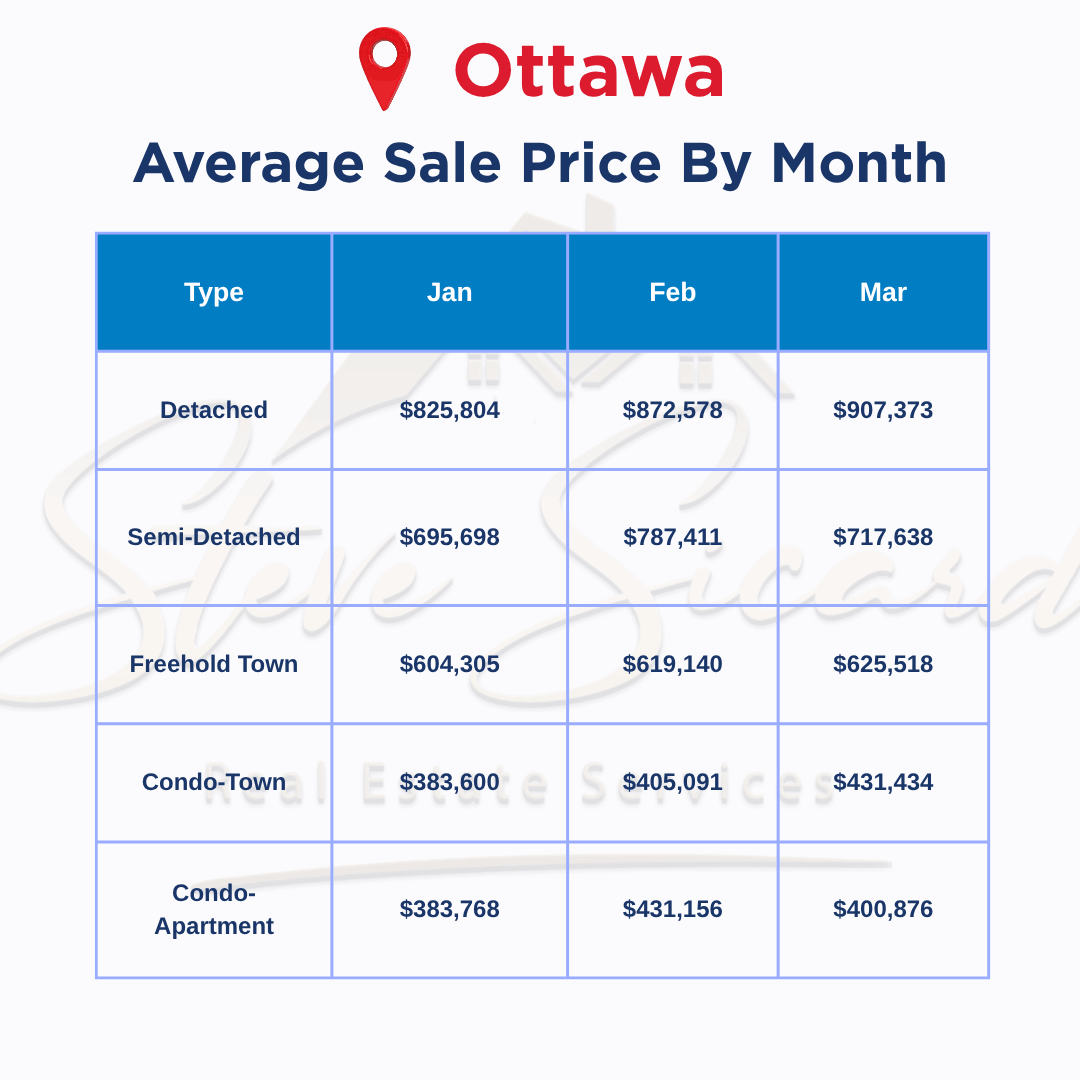
🏡 Ottawa Real Estate Market Update (Q1 2026):

What Buyers & Sellers Need to Know

Typically, I show the numbers for the month and how they compare to the same month last year.

But now that the first quarter of 2026 is complete, I wanted to take it a step further.

👉 I’ve added monthly sales data by property type to give you a clearer picture of how prices are actually moving right now.

Because here’s the truth:
📊 Year-over-year stats are helpful if you’re just curious about your home’s value…
💡 But month-to-month trends are far more useful if you’re thinking about buying or selling.

Let’s break it down 👇


📈 The Ottawa Market Is Gaining Momentum

After a slower winter, March showed clear signs of early spring activity.

👉 More buyers are stepping back into the market
👉 Sales activity is picking up
👉 Especially in the single-family home segment

While sales are still slightly below a “typical” March, the pace of improvement is accelerating.

💡 In simple terms:
The market is waking up—and gaining traction.


🏘️ Inventory Is Rising… But So Are Sales

One of the biggest stories right now:

📦 More homes are hitting the market
📈 But buyers are keeping up

This balance is important.

👉 It’s leading to a gradual tightening of the market
👉 Months of inventory are declining
👉 Homes are being absorbed more consistently across all property types

💡 This is what we call a healthy, balanced market


💰 Prices Are Starting to Firm Up

Here’s where it gets interesting for both buyers and sellers 👇

The MLS® Home Price Index has now recorded:
📈 Two consecutive months of price increases across most property types

That tells us:
👉 Home values are strengthening
👉 Buyer confidence is returning
👉 The spring market is taking shape

💡 We’re not seeing wild spikes—just steady, sustainable growth.


⚖️ A Balanced Market (With Momentum Building)

According to Ottawa Real Estate Board, Ottawa remains in balanced territory.

And that’s actually a good thing.

As Tami Eades, President of the Ottawa Real Estate Board (OREB) explains:

“What we’re seeing is a measured, steady return to activity. Inventory is up, sales are improving, and pricing is firming without overheating.”

👉 Translation:
No chaos. No crash. No frenzy.
Just a stable market with growing momentum.


🔮 What’s Coming Next?

Looking ahead, the outlook from Canadian Real Estate Association suggests:

📈 Demand is expected to strengthen
📉 Borrowing conditions may ease
🏡 Ottawa is already starting to align with this trend

On top of that, recent federal and provincial housing policies could:

👉 Increase activity
👉 Improve supply
👉 Support long-term stability


💡 What This Means for You

🏠 If You’re Buying:

  • More inventory = more choice

  • Prices are stabilizing (but starting to rise)

  • Acting sooner could give you an advantage


🏡 If You’re Selling:

  • Buyer demand is returning

  • Pricing is strengthening

  • Proper strategy is more important than ever


🤔 If You’re Just Watching:

  • Your home value is likely stabilizing or increasing

  • The market is not declining—it’s resetting and rebuilding momentum


📊 Why This Data Matters

This is exactly why I like to look at monthly trends, not just yearly comparisons.

Because real estate decisions aren’t made based on last year…
👉 They’re made based on what’s happening right now


📲 Thinking About Making a Move?

Whether you’re buying, selling, or just exploring your options…

💬 Let’s have a conversation. 
No pressure. Just clear insights to help you make the right decision for your situation. Contact me HERE

Read

🏡 The potential cost of sitting on the fence!

The Potential Cost of Waiting to Buy a Home

🤔 Are you waiting to buy?

Are you putting off buying your home, waiting and thinking that you will get a better deal at the end of the year, or some other time in the future?

There are a lot of things to consider, and it can feel overwhelming.


📉 You can’t time the market

If there is one thing that History has shown us, you can’t time the market. Yes, sometimes the stars align, but that is a rare occurrence.

When I bought my first home, my interest rate was 12.25%, and the rates went as high as 18% before they started coming back down.

We had the down payment and it did not stop us. We wanted to buy our first home, we were told the interest rate would go up.

We knew that rates would come down eventually and hopefully before we had to renew our mortgage.

👉 We all must make the decision that is right for us.


💡 If you’re ready financially…

If you are in a position financially right now to buy your home, then here are some points to consider.


📊 Ottawa Market Snapshot (2026)

It is now April 14, and the numbers are available for the first quarter or 2026. So, let’s look at some numbers.

The Ottawa real estate market is balanced and based on reports from sources such as CREA (Canadian Real Estate Association), and CMHC, Canada Mortgage and Housing Corporation, it will remain balanced throughout the year.

📈 The number of homes available is up 14.4 % compared to the first quarter of 2025.

📉 Although the number of homes sold for the first quarter are down 5.7% compared to the same period in 2025, and the average sale price is down 0.9% also for the same period, the home prices have risen, month to month in 2026.


📈 Average Sale Prices (Source: OREB)

🏠 Detached homes:

  • January $793,874

  • February $830,951

  • March $845,006

🏡 Townhomes:

  • January: $536,106

  • February: $539,639

  • March: 562,513

🏢 Condo/Apartments:

  • January: $388,307

  • February: $428,538

  • March: $401,656


📊 What does this mean?

You can see, with the exception of condo apartments, that the prices have risen month over month.

📈 That is an increase of around:

  • 6% for detached homes

  • 4.9% for townhomes

  • 3.43 % for condo apartments

I do not expect this rate of increase to continue based on past market cycles.


🔮 Market Predictions

Depending on which source you use, CMHC, CREA, or another, the predictions vary, from a 1% overall increase, to a 3.1% overall increase for the year.

It will differ for each property type based on home sales and number of available homes.


💸 Interest Rates Outlook

So far, the bank of Canada has held the key lending rate at 2.25%.

If we go by what most major economists are predicting, including CIBC, RBC, TD and National Bank, the overnight rate will likely remain steady at 2.25% for the entirety of 2026, though this is less certain now than before.

⚠️ Some outliers, like Scotiabank, predict a rise to 3.00% by the end of the year.

👉 That is not to say that lenders will not raise their rates.

For the sake of argument, Let’s say that the interest rates remain the same, so I won’t use this as a cost of waiting to buy.

📌 Please remember though, if the rates do go up, you will need to add it to the cost of sitting on the fence, waiting for a better purchase price.

👉 I will say, that I check in with different sources, and none of them are predicting a drop in home prices for Ottawa. We have already had that correction.


🧮 Let’s Run the Numbers

Let’s run some numbers. Since the predictions for home price increases range from 1% to 3.1%, let’s use 2%.

Also, since it is April, we will use the March sales numbers and a possession of July 1, leaving enough room to provide proper notice to landlords, to calculate the potential cost of sitting on the fence!


🏠 Detached:

Average sale Price March: $845,006. Projected December price: $861,906

👉 This is a difference of $16,900

The average rent for a 3-bedroom, 2-bath detached home is $3000. You can use your actual rent.

As mentioned earlier, we will start July 1, when you would take possession to calculate this cost and will include December.

👉 This number will be $18,000, with a total cost of $34,900


🏡 Townhouse:

Average sale Price March: $562,513. Projected December price: $573,763

👉 This is a difference of $11,250

The average rent for a 3-bedroom, 2-bath townhome is $2600. You can use your actual rent.

As mentioned earlier, we will start July 1, when you would take possession to calculate this cost and will include December.

👉 This number will be $15,600, with a total cost of $26,850


🏢 Apartment:

Average sale Price March: $401,656. Projected December price: $409,689

👉 This is a difference of $8,003

The average rent for a 2-bedroom, 1-bath apartment is $2100. You can use your actual rent.

As mentioned earlier, we will start July 1, when you would take possession to calculate this cost and will include December.

👉 This number will be $12,600, with a total cost of $20,603


⚖️ The Bottom Line

No one has a crystal ball. Prices and interest rates can change. No one can accurately predict the future. 

But based on current data and projections from sources like Canadian Real Estate Association, Canada Mortgage and Housing Corporation, and the Ottawa Real Estate Board:

👉 Waiting could cost you thousands of dollars

The real question isn’t:
“Is this the perfect time?”

It’s:
👉 “Am I ready—and does this move make sense for my life?”

Because when you’re ready…
That’s often the best time to act.


📲 Need Help Deciding?

If you’re unsure whether now is the right time to buy, let’s talk.

No pressure. Just real numbers, real data, and honest advice to help you make the right decision.

Read

Your Lender Is Counting On You Not Reading This

Let’s Take a Closer Look Before You Automatically Sign That Offer

Here's something most homeowners don't realize until it's too late: your mortgage renewal isn't a deadline. It's a planning window, and it opens months before any paperwork ever shows up at your door.


Your lender isn't going to tell you that, by the way.

Most renewal offers arrive close to maturity, dressed up to look simple and convenient. Sign here, keep your payment familiar, move on. No fuss, right? The problem is, the best options rarely show up at the last minute. By the time that envelope arrives, a lot of your most powerful choices are already off the table.


Starting early creates real leverage. It gives you time to compare structures, understand penalties, and actually decide whether staying put, switching lenders, or adjusting your mortgage makes sense for where your life is headed. Waiting until the final weeks usually means accepting whatever is easiest, not whatever is best. There is a difference.


And here's something we say all the time: rate matters, but structure matters just as much.

The term length affects how often you're back at the negotiating table. Prepayment options determine how aggressively you can chip away at your debt if your cash flow improves. Penalties can either protect you or trap you. Payment flexibility shapes how well your mortgage adapts as life keeps changing on you, because life always keeps changing.


In some cases, a slightly higher rate paired with better terms delivers more value than the lowest advertised rate with a pile of restrictions buried in the fine print. Flexibility creates options. Options create control. That's the long game.


Starting early also takes the pressure off. When decisions feel rushed, most homeowners default to familiarity or freeze up worrying about making a mistake. When decisions are planned, the trade-offs are clearer and confidence is higher. We see this all the time.


A strong renewal doesn't feel urgent or dramatic. It feels considered, intentional, and lined up with where you're actually headed next.


Have questions about your mortgage, or want us to compare what you're sitting on to what's currently available? We do free renewal reviews, and our advice could save you thousands.

Meet the team!

Reach out to us at 289-645-1568 or experts@laframboisemortgage.ca and let's review your options early so you go into your renewal with eyes wide open. There is no cost for our service & it could save you thousands.

Read

Reverse Mortgages:

Your Most Common Questions, Answered Honestly

If you're 55+ and considering a reverse mortgage, you probably have questions. Good. You should.

Reverse mortgages can be powerful financial tools for some people, but they're also complex products with real costs and long-term implications. We've sat across the table from hundreds of homeowners exploring this option, and these are the questions that come up every single time.

Let's get into it.


"Will I Lose My Home?"

Short answer: No.

You keep full ownership of your home with a reverse mortgage. Your name stays on the title, and you can live there as long as you want.

The reality is, you need to hold up your end of the deal:

  • Pay your property taxes on time

  • Keep home insurance current

  • Maintain the property in reasonable condition

Do those three things and you're good. The reverse mortgage only gets repaid when you choose to sell, move permanently, or when the home eventually passes to your estate.

Think of it like this: the lender has a loan secured against your property, but they don't own it and they can't force you out as long as you're meeting those basic obligations.


"What Happens to My Kids' Inheritance?"

Short answer: They inherit whatever equity is left.

Here's how it works. When the home is eventually sold (whether you sell it yourself or it's sold as part of your estate), the reverse mortgage gets paid off first. Your heirs get whatever's remaining.

A real example:

  • Your home sells for $600,000

  • Your reverse mortgage balance is $250,000

  • Your heirs receive $350,000

Your kids (or whoever inherits) have three options:

  1. Repay the loan and keep the house (they can refinance into their own mortgage if they want)

  2. Sell the home and keep the remaining equity

  3. Walk away (if the home is worth less than the loan, which is rare but possible)

Here's the part people worry about: Yes, your equity decreases over time as interest compounds on the reverse mortgage. If you take out $150,000 today, in 15 years you might owe $400,000+. That's $400,000 less inheritance.

We'll show you the projections with real numbers so your family knows exactly what to expect. No surprises.


"Can I Still Sell My Home If I Change My Mind?"

Short answer: Absolutely.

You can sell your home anytime you want. You're not locked in.

Here's what happens:

  • You list and sell your home like normal

  • The reverse mortgage gets paid off from the sale proceeds

  • You keep everything that's left over

  • You can use those funds to buy a new place, move into a condo, whatever you want

One thing to consider: Reverse mortgages have setup costs (appraisal, legal fees, arrangement costs). If you sell within the first couple of years, you've paid those costs for not much benefit. That's why we ask how long you plan to stay in the home before recommending this option.

But yes, you have complete freedom to sell whenever you choose.


"What If I Outlive My Home Equity?"

Short answer: You can't owe more than the home is worth.

This is huge and not enough people know about it.

Reverse mortgages in Canada come with a "no negative equity guarantee." Even if your loan balance grows larger than your home's value (which can happen if you live there for decades and home values don't increase), you or your estate will never owe more than what the home sells for.

Example scenario:

  • Your reverse mortgage balance grows to $500,000

  • Your home only sells for $425,000

  • You (or your estate) pay $425,000 and the lender absorbs the $75,000 difference

The lender takes that risk, not you. That's part of what you're paying for with the higher interest rates on reverse mortgages.


"How Much Can I Actually Borrow?"

Short answer: It depends on your age, home value, and location.

The younger you are, the less you can borrow (because the loan has more time to grow). The older you are, the more you can access.

Rough guidelines:

  • Age 55-60: Around 20-25% of your home's value

  • Age 65-70: Around 30-40% of your home's value

  • Age 75+: Around 50-55% of your home's value

Example: If you're 65 with a $500,000 home, you might be able to access $150,000 to $200,000.

Your home's location matters too. Homes in major markets (Toronto, Vancouver, etc.) often qualify for slightly higher amounts than homes in smaller communities.

Important: Just because you CAN borrow the maximum doesn't mean you SHOULD. The more you take, the faster your equity disappears. We'll help you figure out the minimum you actually need to accomplish your goals.


"What Are the Real Costs?"

Short answer: Higher than a regular mortgage, but you're paying for flexibility.

Let's be straight with you. Reverse mortgages are expensive. You're paying for the privilege of:

  • No monthly payments

  • Guaranteed ability to stay in your home

  • No income qualification requirements

  • The lender's risk that you might outlive your equity

Setup costs:

  • Appraisal fee: $300-500

  • Legal fees: $1,000-1,500

  • Lender arrangement/setup fees: Varies by lender

  • These typically get added to your loan (you don't pay out of pocket)

Ongoing costs:

  • Interest rates: Currently around 6-8% (higher than traditional mortgages at 4-6%)

  • The interest compounds because you're not making payments

  • Your loan balance grows every year

What this means in real dollars:

Borrow $150,000 at 7% interest:

  • After 5 years: You owe approximately $210,000

  • After 10 years: You owe approximately $295,000

  • After 15 years: You owe approximately $413,000

The math can be scary. That's why we show you the projections BEFORE you sign anything, not after.


"Do I Have to Take All the Money at Once?"

Short answer: Nope, you have options.

Most reverse mortgage products let you structure the payout however works best for you:

1. Lump sum: Get all the money upfront (common for paying off existing debts or major expenses)

2. Monthly payments: Receive a set amount each month to supplement income

3. Line of credit: Access funds as needed (only pay interest on what you actually use)

4. Combination: Part lump sum, part monthly, part line of credit

The line of credit option can be smart because you're only paying interest on money you've actually drawn, not the total available amount. Less money borrowed equals slower equity erosion.


"What If My Spouse Is Younger Than 55?"

Short answer: It gets complicated, but it's doable.

Both spouses need to be at least 55 to qualify for a reverse mortgage. If one of you is younger, you have a couple of options:

Option 1: Wait until the younger spouse turns 55

Option 2: Put the home solely in the older spouse's name

  • This can work but has risks

  • If something happens to the older spouse, the younger one needs to either repay the loan or sell

  • Not ideal for most couples

Option 3: Look at alternative products

  • Some lenders offer similar products with different age requirements

  • Usually come with different terms and costs

If there's a significant age gap, we need to talk through the implications carefully. The last thing anyone wants is the surviving spouse facing a financial crisis.


"Can I Get a Reverse Mortgage If I Still Have a Regular Mortgage?"

Short answer: Yes, but the existing mortgage gets paid off first.

Here's how it works:

Let's say you're 68, your home is worth $600,000, and you still owe $150,000 on your regular mortgage.

If you qualify for a $250,000 reverse mortgage:

  • $150,000 goes to pay off your existing mortgage

  • You receive the remaining $100,000

The benefit? You've eliminated your monthly mortgage payment AND accessed additional cash. For some retirees struggling with fixed income, this can be a huge relief.

The downside? You're now in a more expensive mortgage product, and your equity is decreasing faster than it would have with the original mortgage.

We'll run both scenarios to show you the long-term impact.


"Is This Just a Scam for Desperate Seniors?"

Short answer: No, but we understand the skepticism.

Reverse mortgages have gotten bad press over the years, sometimes deservedly. In the past, some products had predatory terms, aggressive marketing, and weren't properly explained to vulnerable seniors.

The reality today:

  • Reverse mortgages are regulated financial products in Canada

  • Lenders must follow strict disclosure rules

  • You're required to get independent legal advice before signing

  • Modern products include consumer protections (like that no negative equity guarantee)

That said, they're still not right for everyone. They're expensive, they reduce your equity, and they can impact your family's inheritance.

Here's our take: A reverse mortgage is a tool. Like any tool, it can be used well or used poorly. Our job is to help you figure out if it's the RIGHT tool for YOUR situation, show you what it actually costs, and make sure you understand what you're getting into.

If we think you're making a mistake, we'll tell you. We're building a business on honesty, not just closing deals.


Got More Questions?

You deserve clear, honest answers. Not a sales pitch.

Book a free consultation and we'll:

  • Answer all your questions with real numbers

  • Show you what you actually qualify for

  • Compare reverse mortgages against every alternative available

  • Give you straight talk about whether this makes sense for YOU

Call us: 289-645-1568

Email us: experts@laframboisemortgage.ca

Meet the team

There's zero shame in exploring your options. Never be too shy to call. We've truly seen it all.

Laframboise Mortgage: Your mortgage... rethought!

Read

🏡 Aging in Place: Your Options, Costs & What to Consider

☕ Let’s Sit Down and Talk About This…

If you or someone you love is starting to think about the future…

👉 “Can I stay in my home as I age?”

You’re asking one of the most important questions there is.

And honestly?

👉 Aging in place should always be the first option to consider.


❤️ Why Aging in Place Matters

There’s something powerful about staying in a place that feels like home.

Your routines
Your neighbours
Your community
Your favourite stores and services

It’s all familiar—and that matters more than most people realize.

👉 Familiarity supports both emotional and physical well-being

That’s one of the reasons governments are investing more into:

  • In-home care services

  • Community support programs

  • Accessibility resources

Because when it works…

👉 Aging in place can lead to a better quality of life


⚠️ But Here’s the Honest Truth…

Aging in place isn’t always possible.

And that’s okay.

The goal isn’t to force staying in your home…

👉 It’s to find what works best for you—now and in the future.


🧠 Step 1: Assess Your Current Home

This is where I always suggest starting—with a simple, honest conversation.

Ask yourself (and your family):

  • Will this home still work if mobility becomes an issue?

  • Are there stairs, narrow hallways, or difficult layouts?

  • Can key areas (like bathrooms) be adapted safely?


🔧 Can Your Home Be Modified Safely?

Many homes can be adapted—but it has to be done properly.

For example:

👉 Grab bars in a bathroom

Sounds simple, right?

But here’s what I’ve seen happen:

A handyman installs them using hollow wall anchors…
and when weight is applied?

👉 They fail.

That’s dangerous.


💡 The Right Approach:

  • Work with qualified professionals

  • Ensure proper structural installation

  • Plan modifications based on future needs—not just current ones


💰 What About the Cost?

This is a big part of the decision.

You’ll want to look at:

  • Your available savings

  • Cost of renovations

  • Long-term affordability

  • Available grants or programs

👉 There are options available to help with costs

But the key is:

👉 Speak with someone who will walk you through all of them clearly


🏡 Aging in Place Doesn’t Always Mean Staying Put

This is something many people don’t consider.

👉 You can still “age in place”… just in a different home


💡 What That Might Look Like:

  • A bungalow instead of a two-storey

  • A smaller home with less maintenance

  • A condo with no snow removal or lawn care

  • A home with better accessibility


⚠️ Why This Matters

Your current home might have:

  • A large yard that’s hard to maintain

  • Rooms you don’t use (but still pay to heat and clean)

  • Ongoing upkeep that’s becoming stressful

👉 That adds up—physically, financially, and emotionally


✨ The Goal?

👉 A home that makes daily life easier—not harder


🌿 Lifestyle Still Matters

Let’s say you love gardening…

You don’t need a big property to keep that joy.

👉 A smaller yard or manageable outdoor space might be perfect

It’s about:

  • Keeping what matters

  • Letting go of what doesn’t


🏢 When a Seniors’ Community Might Be the Right Move

For some people, the best option is moving into a senior living community.

And if you haven’t visited one recently…

👉 It’s worth taking another look


🏡 What Many People Don’t Realize:

Independent living suites today often feel like:

  • Condo-style living

  • Private, comfortable spaces

  • Freedom to come and go

But with added benefits:

✔ No home maintenance
✔ No worries when traveling
✔ Social activities and events
✔ Built-in community and support


👉 For many, it’s not a step back…
it’s a step into a more supported and enjoyable lifestyle


🤝 The Most Important Thing to Remember

You have options.

👉 Staying in your home
👉 Modifying your home
👉 Moving to a better-suited home
👉 Exploring a senior community

There is no one-size-fits-all answer.


💬 Final Thought (This Matters Most)

This isn’t about making a quick decision.

👉 It’s about making the right decision

For you
For your lifestyle
For your future


📩 If You Want Help Navigating This…

If you’re starting to think about aging in place—or exploring other options—

👉 I’m here to help

Whether it’s:

  • Connecting you with trusted professionals

  • Walking through your home together

  • Helping you explore alternatives

No pressure. No timeline.

Just a conversation. Reach out to me HERE

Read

🏡 Rightsizing Your Home: Why Downsizing Isn’t Just for Seniors

☕ Let’s Talk About Something Most People Don’t Realize…

When you hear the word downsizing, what comes to mind?

For most people, it’s:
👉 retirees
👉 empty nesters
👉 seniors moving into smaller spaces

But here’s the truth…

👉 Downsizing isn’t just for Boomers and Seniors.

In fact, I like to call it something a little different:

💡 Rightsizing

Because this isn’t about going smaller…
👉 it’s about finding the right fit for your life.


🧠 What Is Rightsizing (Really)?

Let’s imagine we’re sitting at your kitchen table for a minute.

You look around your home and think:

  • “We don’t use half these rooms anymore…”

  • “This place is a lot to keep up with…”

  • “Why does this feel more stressful than it used to?”

That’s not random.

👉 That’s your home no longer matching your lifestyle.


🏡 Rightsizing Doesn’t Mean Giving Up What You Love

This is one of the biggest misconceptions I hear:

👉 “I don’t want to feel cramped…”
👉 “I still want a big kitchen…”

And you absolutely can.

Rightsizing doesn’t necessarily mean smaller rooms—
it means less overall square footage.

You can still have:
✔ A spacious kitchen
✔ A comfortable living area
✔ The features that matter most to you

👉 The difference is this:

You’re focusing on the rooms you actually use
…and letting go of the ones you don’t.

So instead of:

  • Extra bedrooms sitting empty

  • Formal spaces rarely used

  • Unused square footage to maintain

You have:
👉 A home designed around your real life


⚠️ Signs Your Home Might Not Be Working for You Anymore

This isn’t always obvious—but it shows up in small ways:

🔑 Common Signs:

  • You’re only using part of your home

  • Maintenance feels overwhelming

  • Cleaning takes more time than you want to give

  • Your space feels cluttered or inefficient

  • Your lifestyle has changed (kids moved out, working from home, etc.)

  • You feel more stressed in your home than relaxed

And here’s the big one…

👉 Your home feels like work instead of comfort


❤️ Why This Isn’t Just a “Space” Decision

This is where people get stuck.

They think:
👉 “But we love this home…”

And that’s completely valid.

Because a home is more than walls and a roof:

  • It’s memories

  • It’s milestones

  • It’s your story

But here’s the shift:

👉 You’re not leaving your life behind—you’re making room for your next chapter


✨ What Happens When You Rightsize?

This is the part most people don’t expect.

When the home fits your life again, everything feels easier.

💡 The Benefits:

✔ Less maintenance
✔ Lower monthly costs
✔ More usable space (not just more space)
✔ Easier day-to-day living
✔ More time for what matters

And maybe most importantly…

👉 More peace of mind


👨‍👩‍👧 Rightsizing Is for Every Stage of Life

This applies to:

  • Growing families needing better function

  • Couples with changing lifestyles

  • Empty nesters

  • Seniors

  • Anyone feeling “out of sync” with their home

Because life changes…

👉 and your home should evolve with it


🧭 How to Start (Without Overwhelm)

The biggest mistake people make?

👉 Trying to figure everything out at once

Instead, keep it simple:

✔ Step 1: Ask Yourself

  • What do I actually use in my home?

  • What feels like too much?

  • What would make life easier?


✔ Step 2: Start Small

  • One room at a time

  • One decision at a time


✔ Step 3: Explore Options

  • Condo

  • Bungalow

  • Smaller footprint (not smaller lifestyle 😉)

  • Different location

No pressure—just possibilities.


💬 Final Thoughts (This Is the Important Part)

Rightsizing isn’t about giving something up.

👉 It’s about creating a home that supports your life today—not the life you had 10 or 20 years ago.

And if your current home is causing stress…

👉 there’s a good chance a better fit exists.


🤝 If You’re Starting to Think About This…

If you’re reading this and thinking:

👉 “This sounds like us…”

You don’t need to make a decision today.

You just need to start the conversation.

📩 If you want to talk through your options—no pressure, no timelines—
I’m here to help you figure out what makes the most sense for you and your family.

Contact me HERE to book our conversation. 

Read

Downsizing Your Home in Ottawa: A Complete Guide for Seniors & Families (When Is the Right Time to Downsize?)

Let’s imagine we’re sitting at your kitchen table for a minute—coffee in hand—and you’ve just asked me:

👉 “How do I know when it’s time to downsize?”

Honestly… that’s one of the most important—and emotional—questions I get.

And the truth is, downsizing your home isn’t just a real estate decision.
It’s a life decision.

So let’s walk through it together, nice and simple.


☕ When Is the Right Time to Downsize Your House?

There’s no perfect date on the calendar.
But there are some clear signs that it might be time to start thinking about it.

🔑 Common Signs It Might Be Time to Downsize:

  • The home feels like too much to maintain

  • Stairs or layout are becoming challenging

  • You’re only using a few rooms in the house

  • Yard work and upkeep feel overwhelming

  • You’re thinking about being closer to family or amenities

  • You want a simpler lifestyle

And here’s the big one…

👉 It’s starting to feel like the house is working against you instead of for you.

If that resonates even a little bit—you’re not alone.


❤️ Downsizing Is Emotional (And That’s Normal)

This is something a lot of people don’t talk about enough.

You’re not just selling a house.

You’re letting go of:

  • Family memories

  • Milestones

  • Years—sometimes decades—of life

And that’s not something you rush.

In fact, the families I help the most are the ones who take their time and start the conversation early.


🧭 A Simple Downsizing Timeline (No Pressure)

Let’s break this into something manageable.

🗓️ 6–12 Months Before Moving

  • Start thinking about your goals

  • Have conversations with family

  • Explore housing options (condo, bungalow, retirement living)


🗓️ 3–6 Months Before Moving

  • Begin decluttering (slowly—no rush)

  • Start getting an idea of your home’s value

  • Talk to a Realtor (just for information)


🗓️ 1–3 Months Before Moving

  • Finalize your plan

  • Prepare the home for sale

  • Organize what’s staying, going, or being donated


🗓️ Moving Phase

  • Sell the home

  • Transition at your pace

  • Settle into your new space


👉 Notice something here?

There’s no urgency.
Just steps.


✅ Downsizing Checklist for Seniors & Families

Here’s a simple checklist you can come back to anytime:

🏡 Planning

✔ Define your next lifestyle (not just your next home)
✔ Talk with family members
✔ Explore local Ottawa options


📦 Decluttering

✔ Start with one room at a time
✔ Keep what truly matters
✔ Donate or gift items to family


💰 Financial

✔ Understand your home’s current value
✔ Estimate moving costs
✔ Plan for your next purchase or rental


🛠️ Preparing the Home

✔ Declutter and clean
✔ Small repairs if needed
✔ Simple staging (nothing overwhelming)


🚚 Moving Forward

✔ Choose the right timeline
✔ Get support (this is key)
✔ Move at your own pace


💡 What Most People Don’t Realize About Downsizing

Here’s something I see all the time in Ottawa:

👉 Downsizing done right can actually improve your quality of life dramatically

Less maintenance
Less stress
More freedom


🤝 You Don’t Have to Figure This Out Alone

If you’re reading this and thinking:

👉 “We’re not ready yet… but we should probably start thinking about it”

That’s actually the perfect place to be.

No pressure. No timelines. Just a conversation.

Because the best downsizing moves I’ve seen?

They didn’t happen fast.
They happened with a plan.


🎯 Final Thought

Downsizing isn’t about giving something up.

👉 It’s about moving into the next chapter of your life—on your terms.


📩 If You Want Help (No Pressure)

If you or your family are starting to think about downsizing in Ottawa or Orléans:

👉 Message me, click on  “DOWNSIZE”  and we can talk through your situation—at your pace.

No pressure. Just help.

Read
Categories:   aging in place | Aging in place Orleans | aging in place Ottawa | aging parents | Average home price in Ottawa | benefits of downsizing at any age | benefits of downsizing in retirement | buying a home ottawa | buying a rental property | buying a rental property Ottawa | Can I negotiate my mortgage renewal rate | checklist | CHIP Reverse Mortgage | CHIP Reverse Mortgages | compassionate real estate guidance | cost of renovating | cost of renting vs buying | downsize | downsizing | downsizing and selling a home in Ottawa | downsizing for families not just seniors | downsizing for seniors Ottawa | downsizing home seniors | downsizing in Ottawa | downsizing Ottawa Orléans | downsizing seniors Ottawa | downsizing timeline | empty nesters | enior real estate specialist Ottawa | essential spring home maintenance tasks | First time buyers | first time home buyer | first time home buyer vs renting | helping aging parents move | helping elderly parents sell their house | helping parents sell their home | helping seniors downsize | hire a property management company | home buyers | home buying | home buying costs | home buying mistakes Canada | home buying mistakes to avoid | home buying tips | home checklist | home improvement or sell | home inspection | home inspections | home maintenance | home maintenance tips for spring | home maintenance tips to avoid costly repairs | home owners | home ownership | home prices ottawa | home renovation vs moving | home renovations | home repairs | home selling | homeowners | housing market | housing market Ottawa | how to increase home value before selling | how to know when to downsize your home | how to prepare your home for sale | how to prepare your home for spring | How to save money on mortgage renewal | how to simplify your home and lifestyle | how winter affects home buying decisions | investment property management | Is it a good time to buy a home in Ottawa? | Is it a good time to sell a home in Ottawa? | is now a good time to buy a home | Is now a good time to buy a home in Ottawa | Landlord and Tenant Board Ontario | lifestyle | maintenance | Market Update | mistakes after mortgage approval home buyers | Mooneys Bay - Carleton Heights and Area Real Estate | mortgage | mortgage approval | mortgage fraud | mortgage renewal | mortgage renewal mistakes to avoid | mortgage renewal mistakes to avoid Canada | mortgage renewal strategies homeowners | mortgage renewal tips | mortgage renewals | mortgagefraud Ontario | mortgages | Moving | moving to a new home | no-pressure real estate consultation | Ontario real estate fraud | ontario seniors | Orleans - Convent Glen and Area Real Estate | Orleans - Cumberland and Area Real Estate | Orleans Real Estate Agent | Orleans Realtor | ost of waiting to buy a home | ost of waiting to buy a home Ottawa | Ottawa home prices | Ottawa home prices June 2026 | Ottawa housing market | Ottawa housing market outlook | Ottawa housing market report | ottawa housing market trends | Ottawa property management | ottawa real estate | Ottawa Real Estate Agent | Ottawa real estate blog | Ottawa Real Estate Market June 2026 | ottawa real estate market update | Ottawa real estate news | ottawa real estate outlook 2026 | Ottawa Realtor | Ottawa seniors | Ottawa Seniors Real Estate Specialist | Ottawa seniors Realtor | Ottawa single family home prices | planning for retirement housing | planning your next chapter | post winter home maintenance checklist | preparing for retirement | preventative home maintenance tips | property management Ottawa | protecting home equity in Ontario | Real Estate | real estate agent | Real Estate Agent in Orleans | Real Estate Agent in Ottawa | real estate investing | real estate investor | real estate market update ottawa canada | realtor | Realtor for seniors Ottawa | Realtor in Orleans | Realtor in Ottawa | renovate or move | rental application fraud | rental property management | rental property risk management | renting vs buying Ottawa pros and cons | retirees | retirement | retirement downsizing tips for homeowners | retirement home planning | retirement lifestyle | Reverse mortgage | reverse mortgage Canada | reverse mortgage for seniors 55 plus Canada | reverse mortgage pros and cons | reverse mortgage pros and cons for seniors | reverse mortgage questions answered | Reverse mortgages | rightsize | rightsizing | rightsizing your home | self-manage rental property | selling a home ottawa | selling a parent’s home in Ontario | selling the family home | senior living options | senior living options Ottawa | senior real estate services | senior real estate specialist Ottawa | seniors | seniors downsizing | seniors in Ottawa | seniors ontario | seniors real estate specialist | Seniors Real Estate Specialist Orleans | Seniors Real Estate Specialist Ottawa | Seniors Real Estate Specialist® | seniors targeted by mortgage fraud | should I buy a house now or wait | should I renovate my house | should I rent or buy a home | should seniors have title insurance in Ontario | signs it is time to downsize your house | signs your home no longer fits your life | simple home maintenance tasks that make a difference | small home maintenance tasks that save money | spring | spring home maintenance | spring home maintenance checklist | spring maintenance checklist for homeowners | SRES | SRES® | SRES® Ottawa | staging | steps before buying a home | Steve Sicard Realtor | tenant screening | tenant screening Ottawa | title fraud | title fraud Ontario | title fraud Ottawa | title insurance | title insurance for homeowners | title insurance for seniors | Title insurance Ontario | title insurance ottawa | title insursance | what do home inspectors check | what does a home inspector look for | what not to do after mortgage approval | what to look for when buying a house in winter Canada | when should I downsize | When should I start my mortgage renewal | when to downsize | when to downsize your home | when to downsize your home in retirement | why credit matters before closing day | why home inspections are important | winter home buying tips Ottawa Ontario
This website may only be used by consumers that have a bona fide interest in the purchase, sale, or lease of real estate of the type being offered via the website. The data relating to real estate on this website comes in part from the MLS® Reciprocity program of the PropTx MLS®. The data is deemed reliable but is not guaranteed to be accurate.